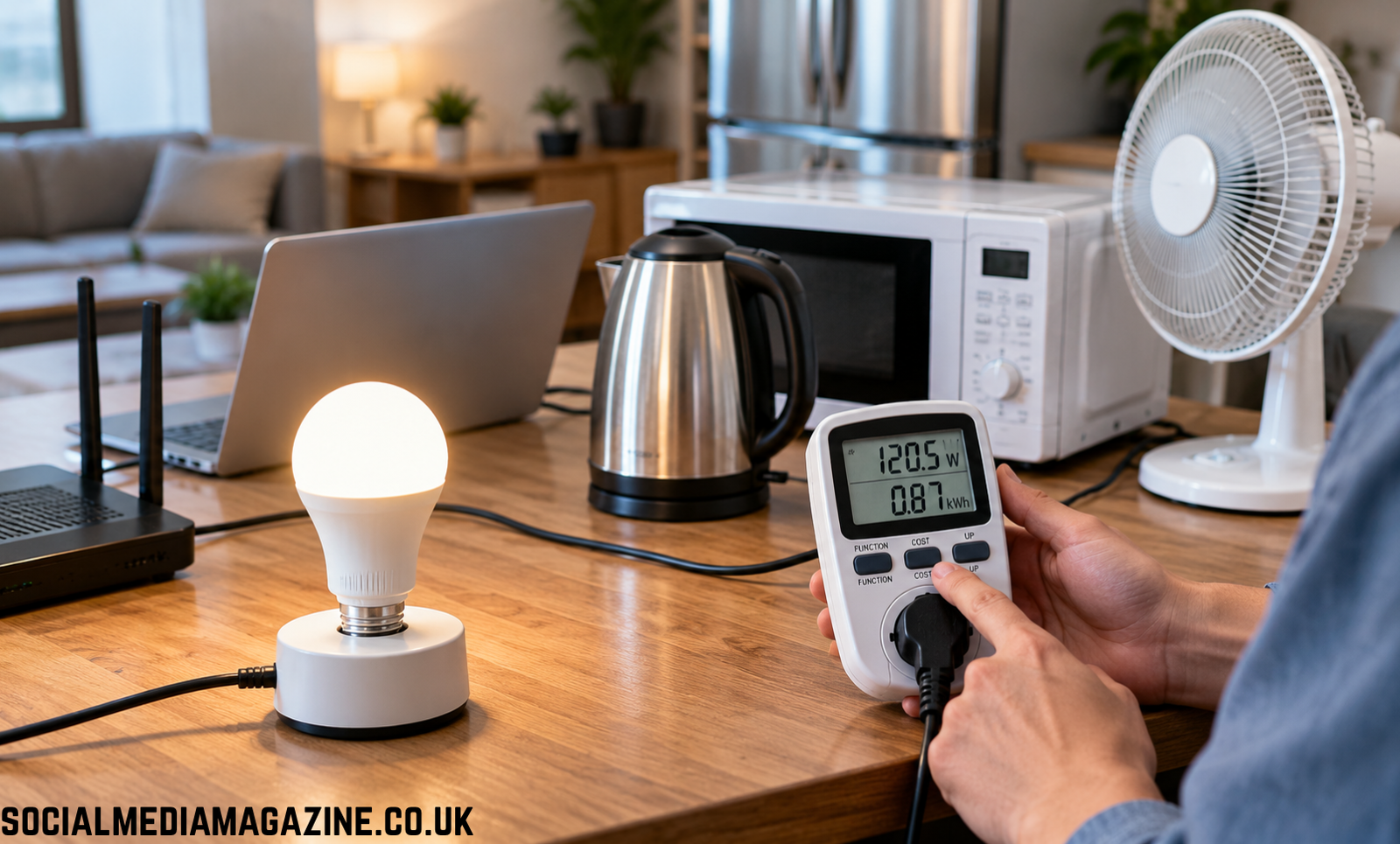
Electricity consumption is an important consideration when selecting household appliances, managing monthly expenses, and understanding how electrical equipment operates. Every device, from a small phone charger to a large air conditioner, requires a certain amount of electrical power. Knowing how to interpret these requirements can help consumers make better purchasing decisions and manage energy use more effectively.
Wattios is a term associated with electrical power measurement, particularly the watt ratings used to describe appliances and other electrical devices. In Spanish, vatios is the standard word for watts, while wattios is also encountered as a spelling. A proper understanding of electrical consumption requires examining more than the power figures displayed on appliance labels. It requires examining operating time, energy efficiency, electricity prices, and the relationship between power demand and actual consumption.
What Is Wattios and What Does It Mean?
Wattios refers to watts, the measurement unit used to express electrical power. A watt describes the rate at which energy is transferred or consumed. Electrical equipment usually displays its power requirements in watts (W) or kilowatts (kW), allowing consumers to identify how much power a device draws under specified operating conditions.
For example, a 100-watt television and a 2,000-watt electric heater have considerably different power requirements. However, their total energy consumption also depends on how long they operate. Understanding this distinction is useful when comparing appliances, estimating electricity expenses, or planning household energy use. The term wattios does not represent an independent unit within the international measurement system, where electrical power is officially expressed in watts.
Why Understanding Wattios Matters
Electricity costs depend partly on how much energy households consume. Many people purchase appliances based on price, appearance, or advertised features without examining their electricity requirements. Although these considerations are important, ignoring energy consumption can lead to higher operating expenses.
Power ratings also provide useful information about electrical safety and equipment compatibility. A high-powered appliance may require a suitable circuit, plug, or dedicated connection. Understanding its requirements helps homeowners make informed decisions about installation and operation. It also encourages consumers to distinguish between equipment that uses considerable power briefly and equipment that draws smaller amounts continuously.
Understanding Watts and Kilowatts
Watts and kilowatts measure the same physical quantity: power. The difference is the size of the unit. Watts are commonly used for smaller devices, while kilowatts provide a convenient way to describe larger electrical loads.
One kilowatt equals 1,000 watts. Therefore, a 500-watt appliance has a power rating of 0.5 kilowatts, while a 2,500-watt appliance has a rating of 2.5 kilowatts. Converting between the two units involves multiplying or dividing by 1,000. This relationship makes it easier to compare electrical equipment with different ratings.
| Power in watts | Power in kilowatts |
|---|---|
| 50 W | 0.05 kW |
| 100 W | 0.10 kW |
| 500 W | 0.50 kW |
| 1,000 W | 1.00 kW |
| 1,500 W | 1.50 kW |
| 2,000 W | 2.00 kW |
The conversion is straightforward, but watts and kilowatts should not be confused with kilowatt-hours. Power describes the rate of energy use, while kilowatt-hours measure the amount of energy consumed over time.
How Wattios Is Calculated
The amount of electrical power in a circuit can be determined from its voltage and current values. In a simple direct-current circuit, power equals voltage multiplied by current. Electrical potential difference is expressed in volts, whereas the flow of electric charge is measured in amperes. The resulting power value is expressed in watts.
The basic formula is:
\[ P=V\times I \]
For example, a device operating at 12 volts and drawing 5 amperes uses 60 watts of electrical power. This calculation is useful for understanding batteries, certain electronic devices, and direct-current equipment. For alternating-current appliances, the calculation may also require a power factor because voltage and current do not always remain in phase.
Understanding these calculations can help when examining product specifications or evaluating electrical loads. However, consumers should generally rely on manufacturer ratings and appropriate measuring equipment rather than attempting electrical measurements without suitable knowledge and safety precautions.
How to Calculate Electricity Consumption
An appliance’s watt rating alone does not reveal its total energy consumption. Operating duration must also be considered. Electricity consumption is commonly measured in kilowatt-hours, abbreviated as kWh.
The formula is:
\[ \text{Energy (kWh)}=\frac{\text{Watts}\times\text{Hours}}{1000} \]
Consider a 200-watt appliance operating for five hours daily. It consumes approximately one kilowatt-hour each day. Over 30 days, its estimated consumption would be 30 kWh, assuming it maintains the same power draw throughout operation.
Electricity usage calculator
Estimate consumption and energy charges using an appliance’s average operating power.Power (watts)Hours per dayElectricity rate (Rs per kWh)
Daily energy use
1.00 kWh
30-day energy use
30.00 kWh
Estimated 30-day energy cost
Rs 1,200
Illustrative energy charges only. Actual bills may include variable rates, taxes, fixed charges, and other adjustments.
Wattios Ratings of Common Household Appliances
Each household device has its own power requirements, influenced by how it is built, its size, and the work it performs. Devices that produce heat often have relatively high watt ratings, while smaller electronics generally operate with lower power requirements. Modern appliances may also change their power consumption automatically according to operating conditions.
The following table provides approximate examples rather than fixed specifications.
| Electrical device | Approximate operating wattage |
|---|---|
| LED lighting bulb | 5 to 15 watts |
| Standard ceiling fan | 30 to 90 watts |
| Portable laptop computer | 30 to 100 watts |
| LED screen television | 40 to 150 watts |
| Refrigerator during compressor operation | 80 to 250 watts |
| Washing machine without water heating | 300 to 800 watts |
| Microwave oven (input power) | 1,000 to 1,800 watts |
| Electric water kettle | 1,500 to 2,500 watts |
| Portable electric room heater | 1,000 to 2,000 watts |
These ranges vary considerably between models. For example, a refrigerator does not normally operate its compressor continuously. Its annual electricity consumption is therefore more informative than multiplying its compressor wattage by 24 hours every day. Similarly, an inverter air conditioner adjusts its power draw according to cooling demand.
How Wattios Helps Identify Energy-Efficient Appliances
Energy efficiency refers to the amount of useful performance obtained from a given amount of energy. An efficient appliance accomplishes its intended task while wasting less electricity. Comparing products requires looking beyond the number of watts displayed on their labels.
For example, two air conditioners may provide similar cooling capacity but consume different amounts of electricity over a season. Their energy-efficiency ratings can help buyers compare performance under standardized conditions. Energy labels on refrigerators and washing machines sometimes indicate electricity usage over a year or for each operating cycle, depending on local labeling requirements.
A lower watt rating does not automatically indicate better efficiency. A weak appliance that takes twice as long to complete a task could consume more electricity overall. A fair assessment focuses on how much electricity each product consumes while completing the same task.
Comparing Wattios With Other Electrical Measurements
Electrical terminology can become confusing because several measurements appear on appliance packaging and technical documents. Each describes a different property of an electrical system.
| Measurement | What it describes |
|---|---|
| Watt (W) | Rate of energy transfer |
| Kilowatt (kW) | 1,000 watts of power |
| Kilowatt-hour (kWh) | Quantity of energy used |
| Volt (V) | Electrical potential difference |
| Ampere (A) | Electric current |
| Volt-ampere (VA) | Apparent power in an AC circuit |
Understanding these differences prevents common mistakes. A battery’s voltage does not directly reveal its energy capacity, and an appliance’s amperage alone cannot determine its real power consumption without additional information.
Kilowatt-hours are particularly important for household budgeting because electricity providers generally use energy consumption as a major component of billing.
Why Energy-Efficient Appliances Are Worth Considering
The purchase price of an electrical product represents only one part of its total ownership cost. Some appliances remain in service for many years, and their accumulated electricity expenses can exceed the original purchase price. This makes operating efficiency especially important for equipment used regularly.
A refrigerator designed to consume less electricity may have a higher purchase price than a model with greater energy requirements. However, lower annual electricity consumption could offset some or all of that difference over its useful life. The outcome depends on the price difference, local electricity tariffs, actual consumption, maintenance, and the number of years the product remains in use.
Energy efficiency can also reduce demand on electrical infrastructure and lower the environmental impact associated with electricity generation. The scale of these benefits depends on how electricity is produced and how much consumption is avoided.
How to Save Electricity by Understanding Wattios
Reducing electricity consumption does not necessarily require replacing every appliance. Many improvements involve changing operating habits, identifying unnecessary energy use, and selecting suitable equipment when replacements become necessary.
One practical approach is to focus on appliances that consume the most energy over a month. Air conditioners, electric heating systems, water heaters, and refrigerators often deserve attention because of their power requirements or operating duration. Adjusting cooling settings, maintaining equipment, and reducing unnecessary operation can make a measurable difference.
Lighting provides another opportunity. Replacing older incandescent bulbs with appropriately rated LED alternatives can reduce energy use while maintaining useful illumination. Electricity expenses can be reduced further by keeping unnecessary lighting turned off and making better use of sunlight during daytime hours.
Standby consumption also deserves consideration. Some televisions, entertainment systems, and electronic accessories continue drawing small amounts of power when not actively used. Disconnecting suitable equipment when unnecessary may reduce this consumption, although devices requiring continuous operation should be treated according to manufacturer instructions.
Common Mistakes People Make When Comparing Power Ratings
Many buyers incorrectly judge an appliance’s running expenses solely by its wattage, without considering how long it operates or how efficiently it performs. This overlooks operating time and performance. A 2,000-watt kettle that heats water quickly may consume less total energy for a task than a lower-powered heating device that takes substantially longer.
Another mistake involves confusing rated power with actual consumption. Some products operate at their maximum rated power only during particular stages. Washing machines, refrigerators, and variable-speed cooling systems may draw different amounts of electricity throughout their operating cycles.
Consumers may also overlook product capacity. A small air conditioner installed in a room with excessive cooling demand can struggle to maintain the desired temperature. Selecting equipment that matches the intended workload is often more effective than simply choosing the lowest wattage.
Finally, electricity cost calculations can be misleading when they ignore changing tariffs, fixed charges, taxes, and seasonal usage. Estimates should be treated as planning tools rather than exact predictions.
How to Choose Appliances Based on Power Efficiency
Selecting an appliance begins with identifying the work it needs to perform. Before selecting a refrigerator, buyers should examine its internal capacity, electricity requirements, physical dimensions, durability, and likely servicing needs. A larger refrigerator is not necessarily a better purchase if the additional capacity will remain unused.
Buyers should compare energy labels using the same testing standard whenever possible. For appliances with variable power demand, standardized annual or per-cycle consumption figures may be more useful than maximum watt ratings. Warranty coverage, repair availability, and expected service life should also influence the decision.
The best choice is generally an appliance that meets the required performance level while maintaining reasonable purchase and operating costs. Electrical efficiency is an important factor, but it should be considered alongside practical suitability.
Benefits of Understanding Wattios Before Buying Equipment
Knowledge of electrical power measurements can improve household planning in several ways. It allows buyers to estimate operating expenses before making a purchase, compare products more carefully, and recognize which devices contribute significantly to electricity consumption.
It can also help households understand the combined electrical demand of appliances operating simultaneously. This information is relevant when planning circuits, selecting backup power systems, or discussing installation requirements with a qualified electrician.
For businesses, understanding equipment power requirements can support budgeting and operational decisions. Offices, shops, and small workshops may operate multiple devices throughout the day, making energy consumption an ongoing expense. Accurate estimates can help identify opportunities to reduce unnecessary use without compromising essential activities.
Wattios and Solar Power Systems
Power ratings are especially relevant when planning solar electricity systems. Solar panels, inverters, batteries, and connected appliances all have electrical specifications that affect system design. Understanding watts and kilowatt-hours helps distinguish the power a system can deliver from the energy it can supply over time.
For example, a solar array rated at 3 kilowatts has a nominal peak power capacity of 3,000 watts under specified test conditions. This does not mean it continuously produces 3 kilowatts throughout the day. Actual generation changes with sunlight, temperature, shading, panel orientation, and system losses.
Similarly, battery capacity is often expressed in watt-hours or kilowatt-hours, while inverter output is rated in watts or volt-amperes. A properly designed system must account for appliance demand, startup loads, available stored energy, and appropriate safety protections.
How Power Ratings Affect Backup Generators and Inverters
When relying on generators or battery-powered inverters, homeowners should account for both regular electricity needs and the extra power some devices require when starting. Certain appliances, particularly those containing motors or compressors, can briefly draw more power when starting than during normal operation.
A backup system must therefore be selected according to the equipment it will support. Adding together the normal power ratings of connected appliances provides a starting estimate, but it may not account for startup surges or the electrical characteristics of individual devices.
Battery capacity also determines how long a backup system can operate. A system capable of supplying 1,000 watts may not be able to sustain that output for several hours unless sufficient stored energy is available. Professional guidance is advisable when choosing equipment for substantial household loads.
Measuring Actual Electricity Use at Home
Appliance labels provide useful estimates, but actual consumption can vary. A plug-in electricity monitor can measure the energy used by compatible devices over a selected period. These monitors may display instantaneous power, accumulated kilowatt-hours, and other electrical information.
For larger appliances or fixed installations, monitoring may require dedicated equipment installed by a qualified professional. Smart meters and whole-home energy monitoring systems can also help households identify usage patterns.
Measurements collected over several days or weeks are often more informative than a single reading. These readings help identify changes in power consumption caused by appliance running hours, thermostat adjustments, and everyday activities at home. Users should ensure that any monitoring device is suitable for the voltage, current, and type of appliance being measured.
The Role of Wattios in Long-Term Electricity Planning
Electricity planning becomes more effective when households consider both immediate requirements and future changes. Purchasing additional appliances, installing air conditioning, or adopting electric heating can increase energy demand. Estimating these changes beforehand can help with budgeting and electrical infrastructure planning.
Keeping track of electricity usage makes it easier to determine whether changes have reduced overall energy consumption. If a household replaces an inefficient appliance, comparing usage before and after installation can help determine whether the change produced meaningful savings. Changes in weather throughout the year and variations in appliance running hours can affect the accuracy of usage comparisons.
Reviewing previous electricity bills allows homeowners to estimate the solar generation or backup capacity their property may require. This reduces reliance on assumptions and helps clarify the relationship between energy demand, generation capacity, and storage requirements.
Conclusion
Wattios relates to the measurement of electrical power and provides a useful starting point for understanding how appliances consume electricity. Learning the relationship between watts, kilowatts, and kilowatt-hours makes it easier to interpret product specifications, estimate energy expenses, and compare equipment with different operating requirements.
The most effective way to manage electricity consumption is to consider power demand together with operating time, appliance performance, and energy efficiency. By reviewing labels, calculating expected usage, and avoiding common comparison mistakes, consumers can make more informed purchasing decisions and identify practical opportunities to reduce electricity costs.