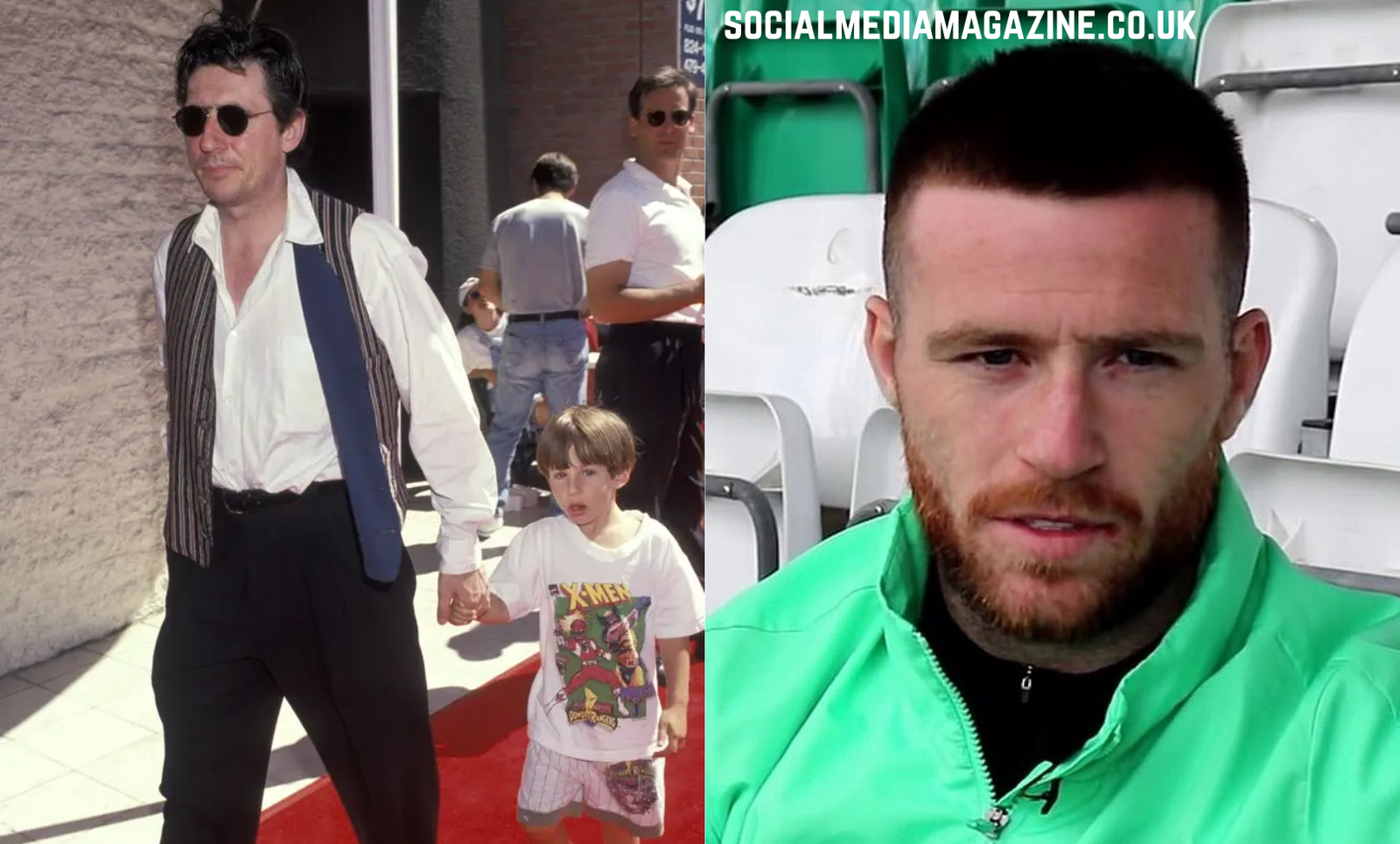
Jack Daniel Byrne, professionally known as Jack Byrne, is an Irish footballer whose career has included experiences in England, the Netherlands, Scotland, Cyprus, and Ireland. Recognized for his technical ability in midfield, Byrne has represented the Republic of Ireland internationally and played an important role in Shamrock Rovers’ domestic success. His journey has involved early opportunities at Manchester City, difficult periods with several clubs, and a return to Irish football that helped him rebuild his career.
Born on 24 April 1996 in Dublin, Ireland, Byrne developed an interest in football during childhood. His professional story is particularly interesting because he did not follow a straightforward path from a major English academy into Premier League football. Instead, he experienced several changes of club before establishing himself as an influential player in the League of Ireland.
Who Is Jack Daniel Byrne?
Jack Daniel Byrne is a professional footballer from Ireland who is best known for his performances with Shamrock Rovers and his appearances for the Republic of Ireland national team. He generally operates in central midfield, although his technical skills allow him to contribute in more advanced attacking positions.
His reputation developed through his ability to retain possession, deliver accurate passes, and create opportunities for teammates. While his time at Manchester City introduced him to professional academy football, his most significant achievements came after he returned to Ireland and joined Shamrock Rovers in December 2018.
Byrne also attracted attention through his international appearances, particularly because relatively few players based in the League of Ireland receive opportunities at senior international level.
Jack Daniel Byrne’s Age, Birthplace and Nationality
Byrne was born on 24 April 1996, making him 30 years old as of October 2026. He is Irish by nationality and grew up in Dublin, where football formed an important part of his early life.
His childhood coincided with a period when many young Irish players viewed English football academies as a possible route into the professional game. Byrne eventually followed that route, leaving Ireland during his teenage years to continue his development at Manchester City.
Although his career later took him to several countries, his connection with Dublin remained significant. His eventual return to Shamrock Rovers gave him the opportunity to compete professionally in his home city.
Family Background and Childhood Experiences
Much of Byrne’s family life has remained outside detailed public reporting. One important event from his childhood, however, is known: his father, John Byrne, died when Jack was 11 years old.
Losing a parent at that age was a significant personal experience. Byrne continued developing as a footballer during the years that followed, eventually moving abroad to pursue his ambitions. His sporting progress took place alongside the personal changes associated with growing up without his father.
There is limited reliable public information about his mother, siblings, or wider family relationships. Although his football career has received considerable media coverage, it would be inaccurate to construct a detailed account of his household or family circumstances without supporting evidence.
Education and Early Interest in Football
Byrne began playing organized football when he was approximately five years old. Byrne learned the fundamentals of the game at Dublin’s St Kevin’s Boys, where he spent his early years improving his football skills.
The club provided an environment where he could develop ball control, passing, positioning, and an understanding of team play. His performances eventually attracted interest from Manchester City, and he moved to England at the age of 15.
Information about his formal schooling, academic qualifications, and examination results is not extensively documented. His teenage years are better understood through his involvement in youth football, particularly the demands of training and competing within a professional academy.
Moving to Manchester City as a Teenager
Joining Manchester City’s academy represented a major development in Byrne’s early career. The move placed him within an organization that was investing heavily in youth development and recruiting promising players from different countries.
Byrne had to adapt to a more demanding football environment, where competition for places was considerable. Academy players were expected to develop their tactical awareness, technical consistency, and physical preparation while competing against talented teammates.
His performances in European youth competition demonstrated his attacking qualities. During the 2014–15 UEFA Youth League campaign, he scored six goals in eight appearances for Manchester City’s under-19 side.
Those figures showed that he could contribute goals from midfield, rather than functioning only as a player responsible for distributing possession.
However, strong performances at youth level did not automatically guarantee a place in City’s senior squad. Byrne subsequently pursued first-team opportunities elsewhere.
First Professional Experience With SC Cambuur
In 2015, Byrne joined Dutch club SC Cambuur on loan. The move allowed him to experience senior football in the Eredivisie, where he encountered a different playing environment from English academy competitions.
His introduction was delayed by an ankle injury sustained during preseason preparations. After missing the opening weeks of the campaign, he made his professional debut against FC Twente on 19 September 2015.
Playing in the Netherlands gave Byrne practical experience against established professional footballers. Dutch football’s emphasis on movement, positional understanding, and passing combinations also provided a setting suited to several aspects of his game.
Although the loan did not lead directly to a permanent move, it marked an important transition from youth football into senior competition.
Blackburn Rovers and Wigan Athletic
Byrne’s next opportunity came in England when he joined Blackburn Rovers on loan in June 2016. The Championship offered a different challenge, with its demanding fixture schedule and competitive physical approach.
He made four league appearances for Blackburn before the arrangement ended in January 2017. Limited playing time meant he was unable to establish a regular position within the first team.
Later that month, Byrne completed a permanent transfer to Wigan Athletic, signing a three-and-a-half-year contract. He made his Wigan debut on 8 April 2017, entering as a substitute during a 3–2 victory against Rotherham United.
During his spells with Blackburn and Wigan, Byrne struggled to secure regular first-team appearances despite having shown considerable promise as a youth player. Changing clubs created opportunities, but earning regular selection remained a challenge.
His Time at Oldham Athletic
In January 2018, Byrne signed for Oldham Athletic on a two-and-a-half-year agreement. The move gave him another chance to demonstrate his ability within English league football.
His technical performances attracted support from sections of Oldham’s fanbase. Nevertheless, his time at the club ended following disciplinary difficulties.
Oldham suspended Byrne over an incident described publicly as taking place away from the field. The club released him on 31 August 2018, despite objections from supporters who wanted him to remain.
The full circumstances should not be expanded beyond established reporting. What is clear is that the departure interrupted his career and forced him to consider another move.
Short Spell at Kilmarnock
Following his departure from Oldham, Byrne signed a one-year agreement with Scottish Premiership club Kilmarnock.
The transfer brought him into Scottish football, but he did not establish himself as a long-term first-team regular. His stay was relatively brief, and another change of direction followed before the end of 2018.
By that point, Byrne had experienced football in several different countries without securing the stable position he had been seeking.
Returning to Ireland offered a different possibility: regular football in familiar surroundings and an opportunity to demonstrate his abilities over an extended period.
Joining Shamrock Rovers and Rebuilding His Career
Byrne signed for Shamrock Rovers in December 2018, with the move proving to be one of the most important decisions of his professional career.
The Dublin club provided a platform where he could play regularly and assume greater responsibility in midfield. His technical strengths became a prominent part of the team’s attacking approach.
He scored his first goal for Rovers on 15 March 2019 during a 3–0 victory over Sligo Rovers. The strike helped establish his reputation among supporters, while his performances throughout the season earned further recognition.
Byrne received League of Ireland Premier Division Player of the Month awards in March and July 2019. His contribution extended beyond domestic competition, as he also played a significant role in Rovers’ European matches against SK Brann and Apollon Limassol.
The move demonstrated how a player who had struggled for continuity elsewhere could become influential after finding a suitable team and playing environment.
Winning the FAI Cup and League Title
One of Byrne’s major achievements came in November 2019, when Shamrock Rovers defeated Dundalk in the FAI Cup final at the Aviva Stadium.
The match was decided through a penalty shootout, with Rovers winning 4–2 after the teams remained level following extra time. The victory ended the club’s 32-year wait for another FAI Cup title.
Byrne remained an important part of the squad during the following season. In 2020, Shamrock Rovers won the League of Ireland Premier Division without losing a league match.
The title was particularly meaningful because it was the club’s first league championship since 2011.
His individual performances also received recognition. Byrne was selected for the PFAI Team of the Year and voted PFAI Players’ Player of the Year for 2020.
These achievements established him as one of the notable midfielders in Irish domestic football during that period.
Transfer to APOEL in Cyprus
After his successful spell with Shamrock Rovers, Byrne left the club at the beginning of January 2021 and joined APOEL in Cyprus.
The move offered another opportunity to compete outside Ireland. However, the experience did not develop as he had hoped.
A back injury affected his availability, and he made only five appearances for APOEL without scoring. His time in Cyprus ended in September 2021 when the club and player agreed to terminate his contract.
Injuries can be particularly disruptive for midfielders whose effectiveness depends on movement, physical readiness, and regular involvement in matches. Byrne’s limited playing time meant that his spell in Cyprus did not reproduce the success he had enjoyed in Dublin.
Returning to Shamrock Rovers in 2022
In November 2021, Shamrock Rovers announced that Byrne would return to the club, with his contract beginning in January 2022.
His return reunited him with an environment where he had previously achieved individual and collective success. It also provided a chance to regain regular football following his injury-affected experience abroad.
For Byrne, the second spell represented another stage in a career that had already involved several transfers and changes of league.
His relationship with Shamrock Rovers became a defining element of his professional identity, although the years that followed also included challenges over selection, fitness, and his place within the squad.
Loan Move to Dubai Irish in 2025
On 30 August 2025, Byrne joined Dubai Irish, a club competing in the UAE Third Division League, on loan until December.
The transfer followed a reported disagreement during training with Shamrock Rovers manager Stephen Bradley. Byrne had been absent from the team’s regular selection in the period leading up to the move.
Rather than remaining without consistent match opportunities, he temporarily relocated to the United Arab Emirates.
On 17 October 2025, Byrne scored his first goal for Dubai Irish in a 3–1 away victory over Emerald Club.
After completing the loan, he described the experience positively, particularly because it allowed him to play regularly and work on his fitness.
The episode reflected another aspect of his career: the need to adapt when circumstances at a club change. His long-term status should be assessed through current official squad announcements rather than assuming that earlier arrangements remain unchanged.
Republic of Ireland International Career
Byrne represented the Republic of Ireland at youth level before receiving senior international recognition.
He made his under-21 debut at 18 and went on to earn ten appearances at that level. In March 2016, senior manager Martin O’Neill invited him to train with the national squad, although he did not play in the subsequent friendly matches.
A further opportunity arrived in March 2019 when he was included in the senior squad for European Championship qualifying fixtures against Gibraltar and Georgia.
His senior international debut eventually came on 10 September 2019 against Bulgaria at the Aviva Stadium. Byrne entered as a substitute and contributed an assist during Ireland’s 3–1 victory.
His appearance carried additional historical significance. He became the 500th player to represent the Republic of Ireland senior men’s team and the 64th Shamrock Rovers player to receive international recognition while representing the club.
Byrne earned four senior caps between 2019 and 2020.
He also appeared against Wales in the UEFA Nations League in 2020, becoming the first footballer based in Ireland’s domestic league to play a competitive senior international match for the country since 1985.
Illness and Physical Challenges
Byrne’s career has been affected by several health-related interruptions, including the ankle injury that delayed his professional debut and the back problems he experienced at APOEL.
Another significant episode occurred in October 2020 when he tested positive for COVID-19 while involved with the Republic of Ireland squad.
Shamrock Rovers confirmed his positive test alongside that of teammate Aaron Greene. Manager Stephen Bradley indicated that Byrne had experienced particularly difficult symptoms.
Byrne later discussed breathing problems associated with the illness.
The experience temporarily interrupted his football activities during a season in which he had otherwise achieved considerable success. His subsequent return to competition demonstrated that he was able to resume his professional career, although the available information does not establish every detail of his recovery.
Playing Style and Strengths as a Midfielder
Byrne is primarily associated with creative midfield play. His strengths include close control, short passing, awareness of teammates’ movement, and the ability to operate in crowded areas of the pitch.
Rather than depending mainly on physical strength, he contributes through technique and decision-making. His attacking involvement can include passing into forward areas, supporting possession around the penalty box, and creating scoring opportunities.
He has also been used in attacking midfield and wider positions, giving coaches some flexibility in how they arrange their teams.
His performances at Shamrock Rovers showed how effectively he could operate when given responsibility for helping the team move the ball through midfield.
Like many creative players, his influence can depend on match fitness, tactical instructions, and the availability of teammates who make attacking runs.
Jack Daniel Byrne’s Wife, Girlfriend and Relationship Status
Publicly established information about Byrne’s romantic life is limited. His football career has been discussed extensively, but there is no sufficiently verified information available here to identify a wife, long-term girlfriend, or current life partner.
It would therefore be misleading to state that he is married, single, or involved in a particular relationship without dependable confirmation.
Unlike his transfers, performances, and international appearances, his personal relationships have not been documented to the same extent in widely accessible sporting records.
His decision to keep parts of his life away from public discussion should be distinguished from any assumption about his relationship status.
Personal Life Outside Professional Football
Byrne’s public identity has largely been shaped by football. His early move to England, subsequent transfers, and eventual return to Dublin have meant that much of his adult life has involved adapting to different clubs and countries.
Living abroad as a professional player requires adjustments to daily routines, training environments, and local cultures. Byrne experienced those changes in the Netherlands, England, Scotland, Cyprus, and the United Arab Emirates.
However, there is limited verified information about his private hobbies, close friendships, residential arrangements, or activities away from football.
It is reasonable to describe him as an experienced professional who has spent many years in competitive sport, but specific claims about his personality or private habits would require firsthand evidence.
Lifestyle, Earnings and Net Worth
Professional football has provided Byrne with opportunities to work in several national leagues, each with different financial arrangements and employment conditions.
His contracts have included permanent transfers, temporary loans, and agreements with clubs competing at different levels.
Nevertheless, his exact salary, personal savings, investments, and net worth are not reliably established in the information available. Figures sometimes circulated about footballers’ finances can be speculative, especially when contracts have not been publicly disclosed.
Similarly, there is no sound basis for presenting details about expensive vehicles, property ownership, or luxury purchases as confirmed aspects of Byrne’s lifestyle.
A more accurate assessment of his financial career is that he has earned his living through professional football, with the terms of individual agreements remaining largely private.
Career Achievements and Professional Recognition
Byrne’s most clearly documented achievements include the 2019 FAI Cup victory, the unbeaten 2020 league championship with Shamrock Rovers, and his individual recognition from fellow professional footballers.
His 2020 PFAI Players’ Player of the Year award was particularly important because it reflected the judgment of other players competing within Irish football.
His Republic of Ireland appearances also represented a notable accomplishment. Receiving international selection while playing in the domestic league distinguished him from many other footballers whose national-team opportunities depended on careers abroad.
Although his career has contained interruptions and unsuccessful transfers, these achievements remain central to his professional record.
Why Jack Daniel Byrne Is Known in Irish Football
Byrne’s story has attracted interest because it challenges the assumption that a promising academy player must establish himself in a major European league to have a meaningful professional career.
His early success at Manchester City created expectations, but his development involved several moves before he found consistent success at Shamrock Rovers.
His achievements in Ireland, particularly his domestic awards and international appearances, demonstrated the value of regular playing time and a suitable tactical role.
Supporters also remember his technical contributions during an important period for Shamrock Rovers, including the club’s return to winning major domestic trophies.
His career illustrates both the opportunities and uncertainty associated with professional football, where progress is not always continuous.
Conclusion
Jack Daniel Byrne’s football career has involved early promise, international experience, injuries, disciplinary difficulties, major domestic achievements, and repeated attempts to establish stability.
From his beginnings at St Kevin’s Boys to Manchester City’s academy and his subsequent professional moves, he has experienced several different levels of European football. His strongest period of recognition came at Shamrock Rovers, where he helped the club win major trophies and earned individual awards.
His four Republic of Ireland appearances further established his place in Irish football history. Although his private relationships, family circumstances, and finances remain largely undisclosed, his professional record provides a substantial account of his development and achievements.
Byrne’s career is ultimately defined not by a single transfer or club but by his ability to continue competing through changing circumstances and to make a significant contribution to Irish domestic football.