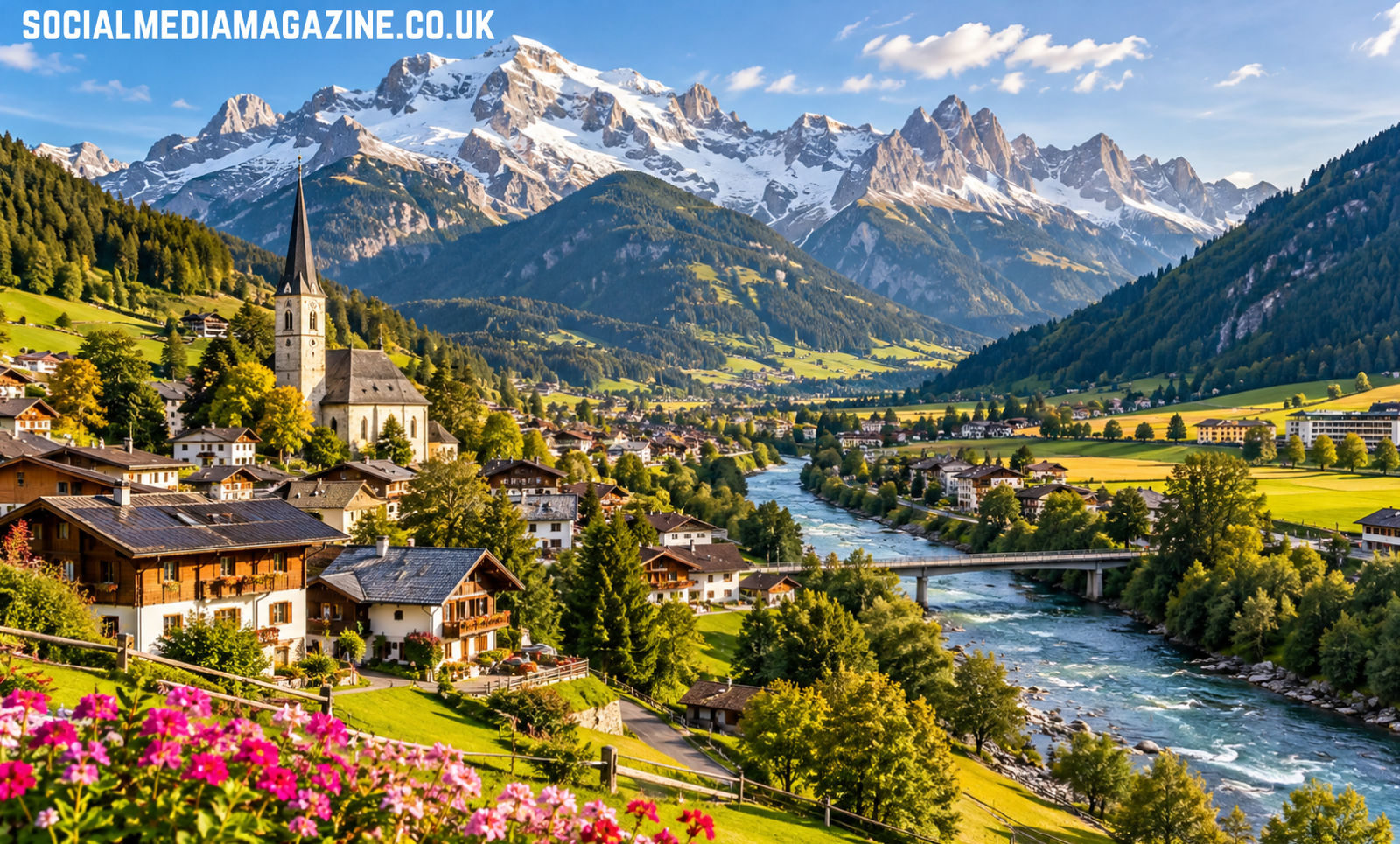
Enntal is a name sometimes used for Ennstal, a part of Austria where the Enns River runs between mountain ranges, small communities, and stretches of cultivated land. The scenery throughout the valley varies considerably, with each stretch revealing its own geographical features and natural surroundings. Several settlements occupy wider sections of the valley, where the available land supports residential buildings, cultivated fields, and essential road networks. In other sections, the mountains stand much closer together, leaving the river to pass through confined rocky surroundings. These contrasting surroundings give the region a geographical and cultural significance that extends well beyond its popularity with holidaymakers.
The region also has a life that continues after visitors leave. Farmers maintain fields, residents travel between towns for work, and local businesses serve communities throughout the year. Although mountain sports attract considerable attention, the valley’s deeper character becomes apparent through its historic communities, geographical development, and longstanding local traditions.
What Does Enntal Actually Refer To?
The name most commonly used in Austria is Ennstal. It comes from the Enns River, with Tal meaning valley in German. The spelling Enntal appears in some internet searches, but Ennstal is the standard name used to identify this Austrian valley on maps and in travel resources.
The name describes a geographical area rather than one town with clearly defined tourist boundaries. It includes places in Styria and Upper Austria, and the character of these places changes along the river. The valley is therefore better understood as a connected landscape containing several communities than as a single attraction.
How the Valley’s Geography Shapes Its Appearance
The Enns Valley has developed between mountain systems that influence its climate, vegetation, and settlement patterns. Where the ground is relatively level, villages and agricultural fields occupy the available space. On the more sharply inclined slopes, dense forests alternate with bare stone surfaces and patches of alpine vegetation. Roads and railway tracks often follow the valley because travelling directly across the surrounding mountains would be more difficult.
These physical conditions explain many features that visitors notice. Houses are frequently grouped in accessible locations, farmland occupies suitable lower ground, and mountain paths connect areas that cannot easily accommodate conventional roads. The valley’s scenery is not separate from human activity; much of its present appearance reflects generations of people adapting to the land.
Schladming: The Town That Connects Visitors With the Mountains
Schladming is among the most recognizable communities in the upper Enns Valley. Schladming’s growth into an established visitor destination has been strongly influenced by its proximity to the Planai slopes and surrounding recreational mountains. The town contains hotels, restaurants, shops, and facilities that support visitors during different seasons.
Schladming is also useful as a starting point for exploring nearby places. Travellers can visit mountain viewpoints, take walking routes through the countryside, or travel toward neighbouring communities. Its railway connections make it one of the more convenient destinations for people who prefer public transport. Despite its tourism reputation, Schladming remains a residential town with ordinary local services and year-round activities.
Ramsau am Dachstein: A Different View of Alpine Living
Ramsau am Dachstein occupies a broad mountain terrace overlooking the lower stretches of the Enns Valley. Its setting includes open fields, traditional farm properties, and mountain views. Rather than being concentrated around one busy resort centre, much of the settlement is spread across the plateau.
During the warmer season, the surrounding countryside attracts walkers, while snowy months bring enthusiasts seeking the area’s established Nordic skiing routes. Farming remains an important visual feature, with grazing land and agricultural buildings forming part of the landscape. In Ramsau, traditional farming practices remain part of daily life despite the growing importance of visitors and recreational activities.
Dachstein: A Mountain Environment Above the Settlements
The Dachstein massif is known for its limestone peaks and high mountain terrain. Ascending from the inhabited lowlands, travellers encounter fewer cultivated fields as forests, steep slopes, and exposed mountain rock become increasingly prominent. Agricultural fields give way to forests, rocky slopes, and eventually areas where vegetation becomes limited.
Dachstein attracts people interested in mountain views and high-altitude attractions. The glaciers on Dachstein offer important evidence for scientists investigating the effects of climate change on mountain ice, snowfall patterns, and high-altitude ecosystems. Travellers should prepare for colder temperatures and unpredictable weather, even when the valley below is experiencing pleasant conditions.
Gröbming and the Surrounding Countryside
Gröbming is a market town that provides a quieter alternative to some of the better-known resort centres. Its surroundings contain agricultural land, residential communities, and mountain scenery. The town serves local residents while also accommodating visitors exploring the wider region.
Nearby Stoderzinken is an important mountain destination, offering elevated views and opportunities for outdoor activities. From higher ground, visitors can observe how fields, roads, and settlements fit into the valley. Gröbming offers a useful perspective on how residents maintain their daily routines and local traditions within a landscape dominated by mountains and farmland.
Admont: Where the Valley’s History Becomes Visible
Admont’s historical reputation is closely tied to a Benedictine monastery founded in the 1000s, which became an important centre of religious and cultural activity. The monastery contributed to the area’s religious and cultural development and remains one of the important historic landmarks in this part of Austria.
Its library is especially notable for its Baroque architecture, painted decoration, and historic book collections. The building provides an opportunity to explore a different side of the Enns Valley, one connected with education, religion, and architectural history rather than mountain recreation. Admont is also situated near the Gesäuse region, allowing visitors to combine cultural sightseeing with outdoor exploration.
Gesäuse: The Narrow and Rocky Section of the Enns Valley
Gesäuse features steep limestone formations and confined river passages, creating a striking contrast with Schladming’s more spacious agricultural surroundings. Here, steep limestone mountains rise above the Enns River, creating a confined passage through the terrain. The combination of rocky slopes, forests, and moving water gives the area its distinctive geographical character.
Gesäuse National Park protects important habitats within this mountain environment. Designated trails allow people to discover the park’s natural surroundings, although certain mountain passages demand advanced hiking skills. The park’s conservation role is equally important, helping preserve natural processes in areas where human activity is carefully managed.
The Smaller Communities of Upper Austria
Farther downstream in Upper Austria, Weyer and Großraming introduce travellers to smaller settlements surrounded by wooded hills and river landscapes. Their surroundings contain forested slopes, river scenery, and smaller settlements rather than the extensive facilities associated with major skiing destinations.
These towns can interest visitors who prefer local architecture, countryside routes, and less concentrated tourism. They also show that the Enns Valley extends beyond the places most frequently promoted in travel material. Each section has its own settlement history and relationship with the river.
The Best Season for Exploring Enntal
Summer is generally suitable for travellers interested in walking, cycling, and visiting mountain attractions. Many recreational routes become easier to access after the winter snow has disappeared from lower and middle elevations. Higher trails may still require additional preparation, depending on conditions.
Winter is more suitable for skiing and other snow activities in established resorts. Spring brings renewed agricultural activity and changing vegetation, while autumn offers cooler temperatures and colourful forests. The ideal visiting period depends on the destination and planned activities rather than one season being best for the entire valley.
How Nature and Agriculture Exist Together
Agriculture has contributed significantly to the valley’s present appearance. Farmers maintain meadows, use suitable land for grazing, and operate within the limitations created by mountain geography. These activities support local food production and help preserve the open countryside around many settlements.
Forests and rivers perform equally important environmental functions. Woodlands provide wildlife habitats and help protect mountain soils, while the Enns and its tributaries support freshwater ecosystems. Protected areas help maintain biodiversity, but environmental responsibility also depends on how visitors behave outside national parks.
Local Food, Culture, and Everyday Traditions
Food in the Enns Valley reflects the broader traditions of rural Austria. Dairy products, potatoes, grains, meat, and seasonal ingredients feature in many regional dishes. Restaurants throughout the region serve traditional Austrian meals, with menus featuring warming soups, locally produced cheeses, savoury dumplings, and assorted baked treats.
Community life is also influenced by farming traditions, regional celebrations, and the practical demands of mountain living. Although tourism has changed some towns, it has not eliminated their local identities. Smaller communities in particular can provide insight into how Austrian rural traditions continue alongside modern businesses and transport networks.
Planning a Journey Through the Valley
Visitors should decide which section of Ennstal they want to explore before arranging accommodation. Schladming serves as a base for alpine recreation, Ramsau provides opportunities to explore its elevated countryside, and Admont attracts those interested in historic architecture and nearby wilderness. Exploring the Upper Austrian section requires a different route.
Railways connect several important towns, while local buses and roads provide access to surrounding communities. A private vehicle can be helpful for reaching more remote destinations, although it is not essential for every trip. Travellers should avoid tight itineraries because mountain roads, unpredictable weather, and seasonal restrictions may increase the time needed to reach their next stop.
Conclusion
Known geographically as Ennstal, this Austrian region has developed its distinctive character through centuries of human settlement alongside the Enns River and its neighbouring Alpine ranges. Its landscape includes resort towns, agricultural settlements, historic buildings, forests, and protected mountain areas.
Schladming, Ramsau, Dachstein, Gröbming, Admont, Gesäuse, Weyer, and Großraming each reveal a different part of the valley’s character. Visiting these destinations reveals a region shaped by local history, established communities, and cultural traditions rather than attractive scenery alone. It is an inhabited part of Austria where geography, history, local work, and tourism continue to shape everyday life.